Small-Space Family Dining Without a Bigger Table by Default
Assess chair movement, everyday seating, storage, and occasional guests before choosing furniture for a compact dining area.
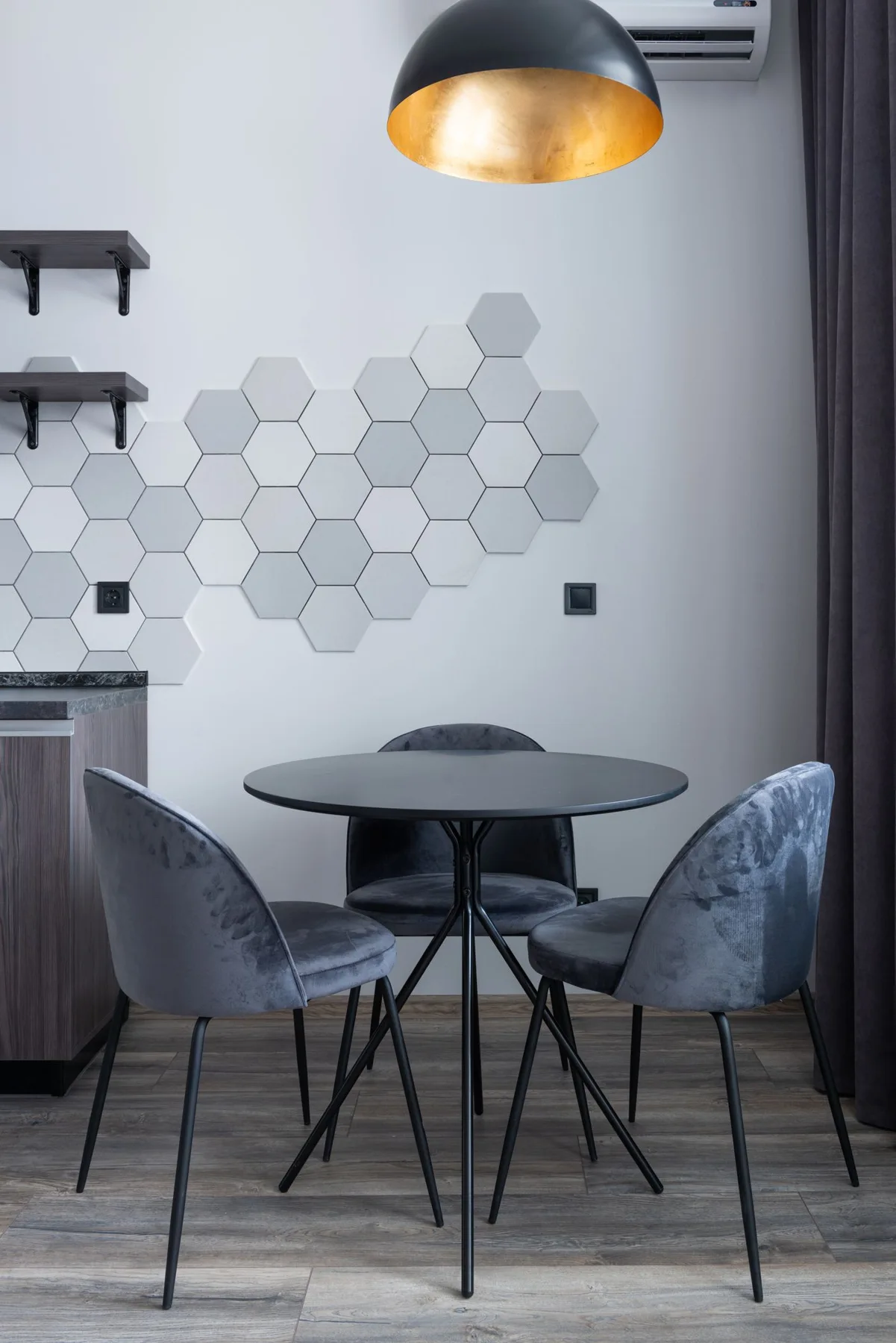
A dining table can fit the room and still make the room difficult to use. Chairs need to move, someone needs to pass behind them, and nearby cupboards must open. In a compact family home, those everyday movements deserve as much attention as the tabletop’s dimensions.
Before shopping, map an ordinary meal with the furniture already there. Notice where people squeeze past, where serving dishes land, and whether the table also handles homework or work calls. The next purchase should improve a repeated problem rather than simply provide a larger surface.
Measure the space in use
Use a temporary floor outline to compare a proposed table with the current arrangement. Include the chairs in their pulled-out positions and the access needed for doors and storage. Follow relevant furniture guidance and allow practical room for the people using the space. A plan with no movement margin is unlikely to feel generous in daily life.
Check the table’s base as well as its top. Legs and central supports can affect where chairs fit and how people sit. A bench may tuck away neatly, but it can require one person to move whenever another leaves. Test the specific layout rather than assuming benches always save usable space.
Separate daily use from occasional hosting
A large fixed table can be worthwhile for frequent shared meals with guests. If visitors come rarely, an extendable design may preserve space most days. Check how the extension operates, where extra leaves are stored, and whether the expanded layout still allows movement.
Folding furniture has similar tradeoffs. It can be flexible, but someone must retrieve, open, and safely store it. Check instructions, load guidance, and stability for the intended use. Avoid buying a clever mechanism without testing whether the household can manage it comfortably.
Choose surfaces with care in mind
Food, pencils, and craft supplies may share the tabletop. Read care instructions for the actual finish and decide what protection each activity needs. A surface described as durable still has limits. If daily use requires a level of care the household will not maintain, choose a more suitable option rather than hoping habits will transform.
Chair covers and cushions also create washing work. Check whether they are removable and how they are cleaned. Upholstery can be comfortable, while simpler surfaces may be easier to wipe according to their instructions. The useful choice depends on the room’s demands and the people sitting there.
Keep storage close but selective
Store frequently used dishes or materials near the table if it reduces repeated trips. Do not add a deep sideboard that makes the dining area harder to navigate. A small shelf elsewhere may be enough for homework supplies, allowing the table to return to meal use quickly.
Give temporary activities a portable home. A tray or box for current work can be moved without dismantling every project. This may make a modest table more useful without changing its size. Agree where the materials go during meals so the arrangement does not depend on one person sorting everything each evening.
Shopping checklist
- Table and chairs fit when actually in use.
- Doors, cupboards, and walkways remain usable.
- The base allows comfortable seating.
- Any extension or folding system is manageable.
- Surface care fits everyday activities.
- Occasional furniture has a real storage location.
Common questions
Is a round table always better in a small room?
No. Room shape, seating needs, and the table base affect the result. Compare actual dimensions and movement instead of choosing by shape alone.
Can dining and crafts share a table?
Yes, with appropriate protection and a simple clearing system. The art supplies guide explains portable storage for everyday projects.
What should be upgraded first?
Address the biggest daily obstacle. Sometimes moving storage or changing one awkward chair helps more than replacing the table.