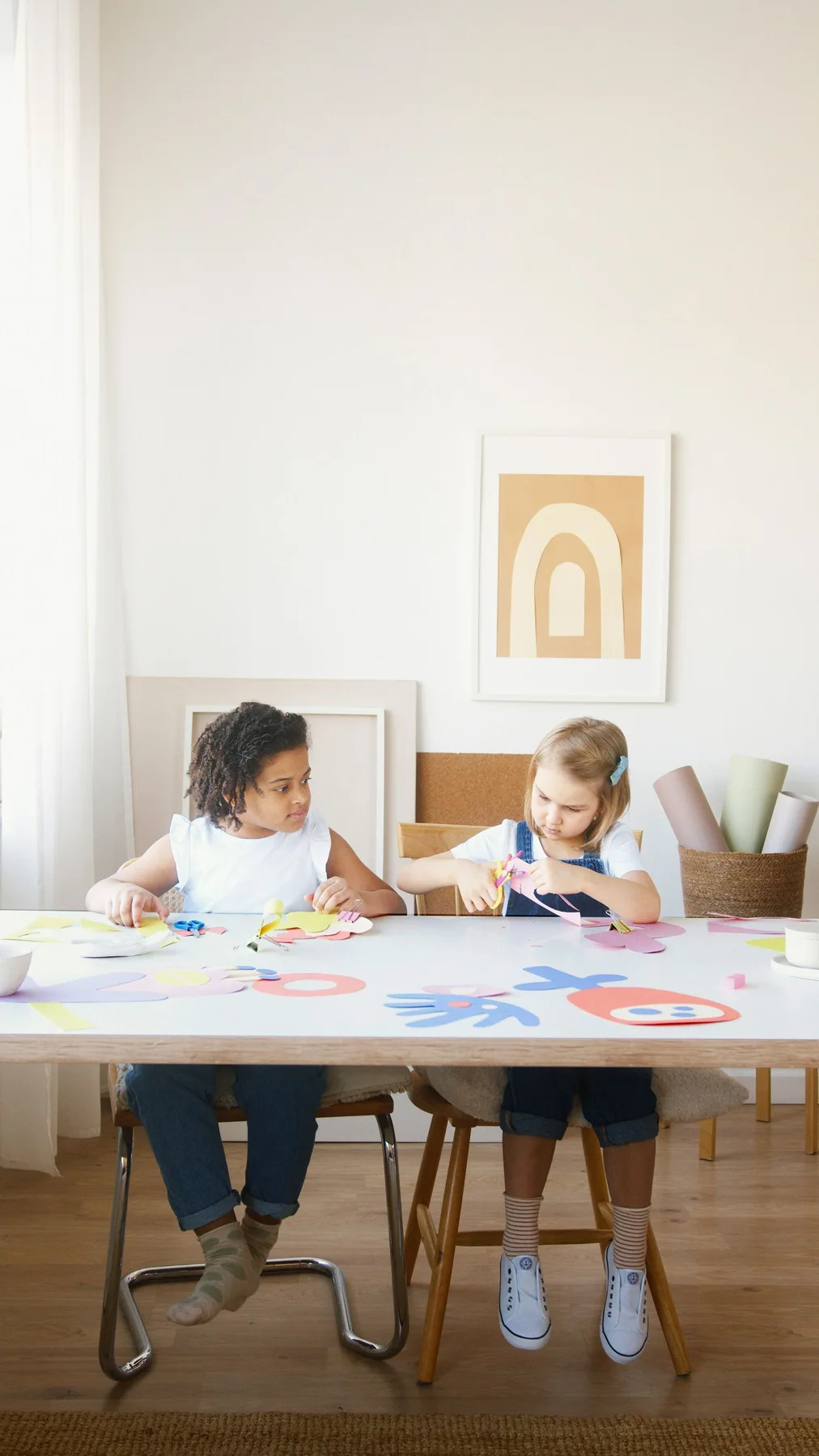
An Everyday Art Kit That Is Easy to Set Out and Put Away
Choose age-appropriate creative supplies around cleanup, storage, and the kinds of projects your family enjoys most.

An art kit is most useful when it can reach the table before enthusiasm disappears. A cupboard of elaborate supplies may be less inviting than a small box containing paper and a few familiar tools. Begin with the projects your family actually chooses, then create a setup that can handle them without a large cleanup operation.
Think about the available surface and who shares it. A dining table that must be cleared for dinner calls for portable storage. A dedicated desk can hold more materials, but it still benefits from clear boundaries. The room, rather than the size of a craft-store display, should shape the collection.
Start with a reliable core
Paper, drawing tools, and a suitable adhesive may cover many everyday projects. Add other materials when a specific activity requires them. Read age guidance, warnings, and intended use on every product. Terms such as washable or non-toxic do not remove the need to follow instructions, supervise appropriately, and keep materials out of mouths.
Choose tools that suit the user’s grip and ability. A beautiful fine pen may frustrate a child who prefers broad marks, while a large set of similar colors may add little to a beginner’s enjoyment. Try a modest selection before paying for a comprehensive collection that is difficult to store.
Treat washable as a qualified claim
Check what the manufacturer says the product can be washed from and how. Not every finish, textile, or painted surface behaves the same way. Use appropriate protection for the actual table and clothing, following relevant guidance, rather than relying on a label to guarantee an easy result everywhere.
Keep water and cleaning materials manageable. A stable container and a small working area can simplify painting more than a specialized easel. If a project involves materials with particular ventilation or handling requirements, follow the instructions and choose another activity when the space cannot support them.
Store by the moment of use
Put frequently used materials together so the whole basic kit can travel in one move. Keep age-restricted tools, small parts, and products requiring adult handling in separate appropriate storage. Accessibility is valuable only when it matches the child’s stage and the material’s instructions.
Make returning supplies obvious. A simple tray for drawing tools and a folder for paper may work better than many tiny compartments. Check that lids close properly and markers return with caps. Replacing one dried-out item is less frustrating when the rest of the kit is easy to inspect.
Decide what happens to finished work
Create a temporary place for drying or displaying projects before starting. Without one, a freshly painted sheet can occupy the dinner space or be moved before it is ready. Use a safe, appropriate display method for the room and keep walkways clear.
Ask children which pieces they want to keep once the work is dry. A folder or occasional photograph can preserve selected projects without requiring every sheet to become permanent storage. Avoid treating the selection as an immediate judgment of artistic quality; it is a shared decision about available space.
Shopping checklist
- Products suit the child’s age and intended activity.
- Instructions and warnings are clear.
- The work surface can be protected appropriately.
- The kit can be carried and returned easily.
- Supplies have a secure home when adult supervision is needed.
- There is a place for projects to dry.
Common questions
Is a large starter set good value?
Only when its contents will be used. Check the quantities of useful materials rather than the total item count, which may include many small accessories.
How can siblings share a kit?
Keep suitable shared basics together and separate materials intended for older children. The toy storage guide explains how broad categories can remain understandable.
Does creativity need a dedicated space?
No. A protected table and a portable kit can support ordinary projects just as well when setup and cleanup are realistic.